Front Street Brewery in Wilmington, NC

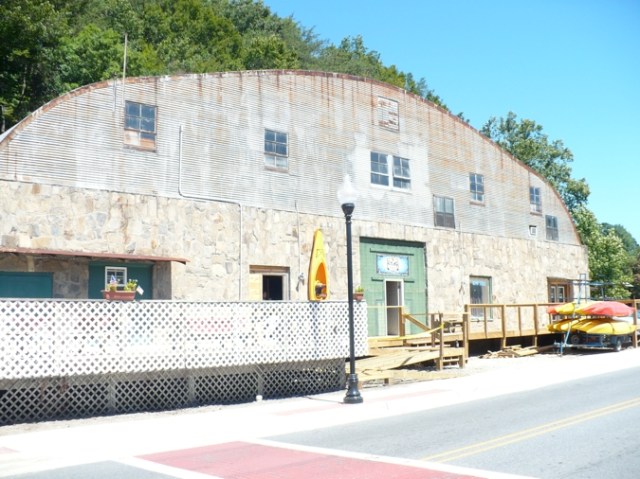
Out front of Front Street Brewery

Over New Year’s weekend, I went on a family trip with my in-laws to Wilmington, NC, where we met up with some long-time family friends from Columbia. It was a fun three day excursion to welcome in 2011. We went for a walk on the beach, ate seafood at the Fish House Grill in Wrightsville Beach, watched bowl games. And drank. A lot. Of beer.

In true Zokan fashion, when we rolled into town on Friday around 1:00, the first thing we did was stop at Front Street Brewery for lunch. This brewpub has a special place in Zokan family lore. My father-in-law had a good bit of business in Wilmington back in the day, so he frequented the brewpub often. (Rumor has it that Nicole may have accompanied him on a couple of these trips and had a beer or two when she may or may not have been of age…)

The brewpub’s facade is unassuming among the historic storefronts on Front Street, however the fermenters and brewhouse immediately greet you on the left upon entering, reassuring you that you’re in the right place.

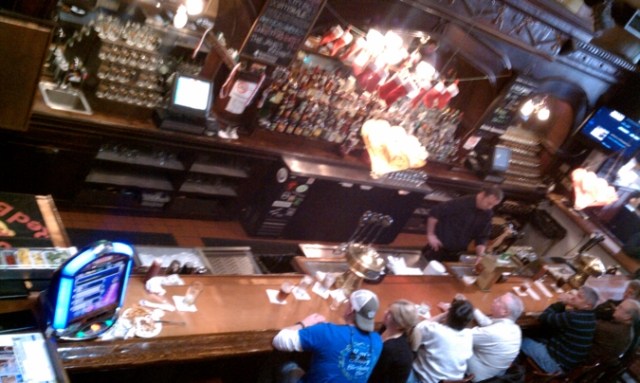
While waiting for a table, we had our first round at the bar, which had seating for a dozen. I began with The James Brown, a seasonal brown ale. I’m not sure the Godfather of Soul would have enjoyed this one. I found myself slightly disappointed, as it was a little too bitter, lacked enough body and had a dusty character. It wasn’t terrible, but it wasn’t great. It reminded me of a rye brown I once brewed that I wasn’t too fond of.
However, my faith was restored when I tasted Nicole’s IPA. This IPA achieved legendary proportions according to my father-in-law, so there was a lot of hype surrounding this beer. I must say, it lived up to the billing as a solid choice. Nice malt backbone with a gripping bitter finish. Not spectacular, but I was impressed.

We had lunch upstairs, which was a cozy, compact area with a low ceiling. The food menu wasn’t cutting-edge, but featured a lot of Irish bar-style classics. I chose the Brew-BQ burger, which included Scottish Ale BBQ sauce.

Of course, I had to get the Dram Tree Scottish Ale to go with my BBQ burger. The Scottish was miles above The James Brown. It had a big, sweet toffee malt flavor with a substantial body and lingering finish. I enjoyed it immensely with my burger.

On Sunday afternoon, the entire group of us, 12 deep, commandeered the front corner of the downstairs dining area to watch some NFL football. The Zokans were on pins and needles as the Packers were fighting for their playoff hopes against the Bears, and I was watching the one spec of hope I have as a Broncos fan, as Tim Tebow went up against the Chargers.
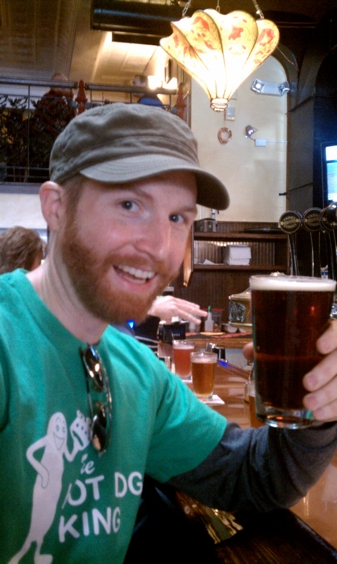
The Hot Dog King holding The James Brown

I started out my afternoon with the Coastal Kolsch. This was a tasty golden Kolsch with a bready malt flavor and clean finish. If I may be so bold, I would say it reminded me of the Kolsch I brewed last summer, so that made me feel pretty good.

Next it was onto the American Amber, which like The James Brown, didn’t seem to achieve a good hop/malt balance. I didn’t care for that one. I tried a sip of someone else’s Tiny Tim’s Christmas Ale, an Imperial Java Porter, a 9.2% coffee-malt bomb. Tasty, but so intense it would probably take me two hours to drink a pint.

I ended up coming full-circle and going back to the IPA to finish up the session. My palate was shot by this point and I needed a can’t miss closer to continue cheering on Tebow and his comeback of futility. Luckily, the Broncos came up just short and secured the number two pick in next year’s draft.

Even though Front Street Brewery had a few misses, there were more than enough hits that it did not come up short. It’s a great place to hang out, eat dinner, watch football, whatever you fancy. It has a solid lineup of beers, good food, a cool atmosphere, and waitresses in short jumpsuit skirts, which make it a place where I could become a regular, if I didn’t live 5 1/2 hours away.

Posted in Beer spots, Breweries | Tagged , , | 2 Comments

Untamed Beer reviewed on the Bearded Brewer

Perhaps the greatest beer label of all-time, courtesy of The Bearded Brewer

My homebrewing pen pal in Minnesota, The Bearded Brewer, posted a review of several beers I sent him this fall. He was very complimentary, and I’m honored to receive such praise.

I am really looking forward to receiving his shipment in the coming weeks. Not only does he make good and imaginative beer, his beer names and labels are awesome. You must check out his label gallery.

Posted in Homebrew, Untamedbeer news | Tagged , | 3 Comments

results of the open fermented tripel

I’m back! Did you miss me? In case you were wondering, I’m not dead, I’m not pregnant and I haven’t stopped drinking beer. I felt like I needed a break to recharge the creative batteries. After a two month hiatus, I’ve decided to resurface in the blogosphere.

I realized that I never did follow-up with the results of the open-fermented tripel I brewed back in September. I’m sorry I left you hanging for two months.

It turned out very well. No infections or anything malicious. In fact, I thought it was one of my best beers.
The beer was very aromatic, with a malty sweet, banana, circus peanut flavor. It finished dry with a mild bitter, funky twist at the end.

While it was not overpowering, I do believe that the open fermentation contributed to enhancing the fruity ester character in the beer. I feel like it maintained a nice balance and was an exceptionally drinkable beer.

I would love to try this technique again, especially if I can get a fermenter that will provide a large surface area. I was using a bucket, which doesn’t provide the exposed surface area to make it an ideal fermenting vessel for an open fermentation. That may have inhibited the potential of the fermentation.

So if you feel like being risky, give it a shot. Don’t be scared!

Posted in Homebrew | Tagged , , | 4 Comments

Brewgrass 2010

This year, I came prepared.

Brewgrass, held at Martin Luther King Park in Asheville, North Carolina, is one of the most anticipated festivals in the Southeast. Tickets go on sale in February and sell out within a week. The Brewgrass people know what they are doing. Scarcity creates buzz.

Brewgrass 2009 was my beer festival experience. I was like a kid in a candy store. Dozens of new beers to try, new breweries to explore and new friends to meet. It was an awesome time.

Now that I’m a grizzled veteran of seven beer festivals, (Wow, it was a busy year.) I wondered how my experience would be the second time around. Over the past year, I’ve spent a lot of time in North Carolina and have had the chance to sample the wares of most of the breweries in the region.

I wondered how that would affect my experience. Would the excitement and newness wear off? Would Brewgrass turn into another ho-hum festival with the same-old-same-old?

No caption could do this justice.

I’ve discovered that if you’ve made the effort to get to know people within the beer community, (It’s not that hard. Beer people are some of the friendliest, most accessible people you’ll meet.) festivals become family reunions. So even if you’re not too excited about the beer selection or the venue, you still come out to reconnect with friends and hopefully meet a few more.

That’s how Brewgrass 2010 was for me. I certainly wanted to get my hands on any new beers I could find, but it was more about hanging out and having fun.

To be truthful, I thought the beer selection in 2009 was better than it was in 2010. Last year, I remember sampling several barrel-aged brews, casks and other rare goodies. I didn’t feel like there were very many unique selections to be had this year. Then again, it’s possible with 40 breweries represented that I didn’t find the diamonds in the rough.

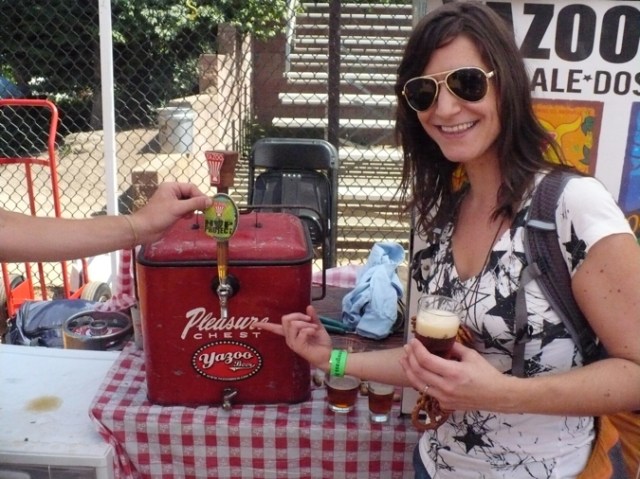
What delight would be worthy of the Pleasure Chest? Why that would be Yazoo's Hop Project, an IPA brewed with Sorachi Ace.

Here is the short list of my favorite noteworthy beers:

  • Olde Hickory Death By Hops – Gets my vote for best use of hops. And they used a lot of them.
  • Coast Brewing Event Horizon – A dark IPA or whatever you want to call it. Intense hops perfectly balanced by dark malt. Another winner. Then again, we’re all winners here.
  • Thomas Creek Up the Creek Extreme IPA – They ran it through a randal of Sorachi Ace hops. Crazy awesome blend of citrus flavors: grapefruit, lemon and orange all just smack you in the face.
  • New Belgium Eric’s Ale – The only sour I found at the festival. New Belgium has this sour thing down.

There are two things we take very seriously: beer and beards

I’m already looking forward to next year. Even though I’ve gained a lot of festival experience in the past year, there are still a couple things that I need to keep in mind for next year:

  • Half-pours are key, as 8 oz. sample pours add up in a hurry. We don’t need any heroes.
  • I shouldn’t attempt to finish the cask of Dopplebock at the Thomas Creek tent at the end of the festival. Hungry children wouldn’t get the dopplebock anyway.

Remember, boys and girls, it’s a seven-hour marathon, not a sprint.

I wish I could have used the scoreboard to track how many samples I had throughout the day.

Posted in Beer events | Tagged , , | 1 Comment

daredevil brewing – open fermentation

In May, I watched episode 4 of Brewing TV on open fermentation. In the video, Michael Dawson brewed a Topless Hefeweizen using his standard hefe recipe, but this time he left the top off the fermenter. I was inspired to give this a shot, and I finally got around to it last Friday.

For most homebrewers, the thought of open fermentation can cause heart palpitations. After all, from the very first words we read or advice we got from veteran homebrewers puts the fear of God into you about those nasty beasties that can turn your malt nectar into a sour mess.

First, let’s differentiate between open fermentation and spontaneous fermentation. Spontaneous fermentation does not use brewer’s yeast and is left open to allow any of the wild yeast and bacteria to make a home and do the fermenting.

Open fermentation is different in that you pitch brewer’s yeast like normal, but you leave the fermenter open. The reason this works is that once the yeast start fermenting, they release carbon dioxide, which is heavier than the air we breathe.

Since it’s heavier, it stays on top of the fermenting beer and forms a protective force field over the beer, as yeast and microbes in the air need oxygen. In addition, the krauzen, the foam that forms during fermentation, also provides a protective barrier.

Sounds simple enough, but why in the world would anyone be crazy enough to risk the sanitation of their beer to leave the lid off? Well, yeast produces a lot more esters when open fermented. Fruity and spicy character becomes more pronounced. It’s a technique that’s often used with hefeweizens and Belgian beers to kick them up a notch.

First, be aware this is not intended to be the definitive guide to open fermentation. I recommend watching the Brewing TV episode to see a good demonstration. I’m going to simply share my experiences using a Sports Guy-esque running diary.

Untamed Open Fermented Tripel

For my first foray into open fermentation, I decided to do a Belgian Tripel. I’ve never brewed an all-grain Tripel before, so this is new on all fronts for me.

Brewing went as any brew normally would. The original gravity came out to 1.072. I’ll pick up the dairy with the pitching of the yeast.

Friday, September 17, 2:45 pm (0 hours)

After aerating for a half hour, I pitched one package of Wyeast Belgian Abbey 1214 into the fermenting bucket and crossed my fingers. The foam you see in the photo is not krauzen, it was left over from aerating.

I half expected the heavens to open and the yeast to sing, but nothing really happened. It’s pretty much like normal, except I’m not putting a lid on the bucket. I feel slightly crazy for doing this and wonder if I’ve just wasted an afternoon and $60.

Overall, though, I’m confident. After all, people have been doing open fermentations for centuries. It can’t be that crazy, right?

4:30 pm (2 hours)

After pitching the yeast, I went out to run some errands. As soon as I walked in the door, I could smell bread and beer. The apartment smelled like a brewery. It was glorious.

However, there isn’t any activity in the beer. I do recall that some Belgian yeast strains that I’ve used have been slow. I am not concerned, at least not yet anyway.

9:15 pm (6.5 hours)

Still nothing. I think this is the point in every brewer’s life when you have to fight the fear and resist the urge to panic. We’ve all been there. I just have to remain calm and trust the process. I just hope I can sleep.

No visible signs of fermentation

Well, off to bed. Man, I hope this works.

Saturday, September 18, 5:00 am (14 hours)

Foam!

Because I am an old 33 year-old-grown-ass man, I have to get up to pee each morning around 4:30 or 5. (See, that’s what blogs are for, so people I’ve never met can learn that about me.)

I decided to check out the beer before getting back in bed, and I saw a pleasant, fluffy layer of krauzen on top. The aroma was still bread-like, with a hint of clove tossed in.

There isn’t much vigorous activity or bubbling visible. It just looks like a peaceful, puffy cloud of deliciousness.

8:30 am (17.5 hours)

Today is Brewgrass, one of the best beer festivals in the Southeast. I’ve had my ticket since February. Needless to say, I’m excited about the day ahead.

Before heading out the door, I’ve skimmed the krauzen off the top of the beer. This initial layer of foam, as you can see in the photo above, has some hops and other impurities that are helpful to remove from the beer. After removing the krauzen, new foam started to appear immediately, reforming the layer of protection.

Bowl of Krauzen

I also took a sanitized spoon and roused the yeast by gently, yet firmly, stirring from about 2/3 of the way into the bucket. From what I have heard, yeast tends to get very relaxed in an open fermented environment, so they tend to fall asleep faster than in a closed system. In order to get them to finish the work, you have to nudge them and wake them back up by stirring them back up.

Now, it’s off to Brewgrass. I’m going to miss my beer! More than 24 hours unsupervised. Now I know what it feels like to be a parent and to leave your child for the first time.

Sunday, September 19, 3:00 pm (48 hours)

Got home from Brewgrass. More on that to follow.

The beer has little foam left on it. I’d be concerned, but I’m too tired. I roused the yeast in an effort to see if I can jump start it a little more. The gravity stands at 1.014 (7.6% ABV) so I would be cool if it really didn’t ferment any more.

I’d love to see it dry out under 1.010, but I don’t think I’m getting there based on how slow the fermentation is going at this point.

7:00 pm (52 hours)

I’ve finally lost my nerve. No more foam is forming, so I’m putting the lid on it. Without a definitive protective barrier, I’m not taking any chances. I’ll come back and see how it’s doing in a couple days.

Wednesday, September 22, 7:30 pm (five days)

I took a hydrometer reading, which came in at 1.008, so I figure that fermentation should be nearly done. That’s about 8.5% ABV, which is about what I was hoping for from this batch.

I did taste the sample I took for my gravity reading and it was interesting, perhaps the most complex beer I’ve brewed. Obviously, the finished product will be different, but the flavor and aroma was pretty intense. At this point I tasted bananas, circus peanuts, black pepper and a hint of old sock.

There are no signs of infection and if all goes well I think it’s going to turn out pretty tasty once it mellows and conditions. I went ahead and racked the beer to secondary, where I will let it sit for at least another two weeks. I haven’t decided yet if I’m going to keg or bottle condition. Either way, once the beer is done, I’ll post again and let you know how it turns out.

Assuming it does turn out well, I did enjoy the process. The sights and smells over the course of fermentation enhanced the brewing experience. After all, that’s why we do this, right? To become more connected with the beer.

Don’t be scared, give it a shot.

Posted in Homebrew | Tagged , | 5 Comments

beer on the frontier: Nantahala Brewing Company

For the long Labor Day weekend, Nicole and I decided we would take a camping trip to far Western North Carolina and visit our friends Chris and Cristina Collier, brewers and co-founders of Nantahala Brewing Company in Bryson City. After all, we base all our trips and vacations around beer, so it seemed like a good reason to pay our first visit to the new brewery.

The camping portion of the weekend turned out to be ill-fated, literally. Nicole came down with a cold or some sort of illness on Thursday, but being the trooper that she is, she decided we should try to go camping anyway. However, we started out on Friday later than we planned, so it was getting dark before we could find a legal spot to camp near Bryson City. To top it off, a cold front was moving through, so there were also spurts of rain throughout the evening.

Between the illness, darkness and rain, we decided a motel stay was in order. We ended up at the Ridge Top Motel in Bryson City. I must say that it exceeded expectations for $60 a night. The actual hotel looks much better than the photo on the website. It was not a bad stay and we were able to spend a couple hours drinking Dale’s Pale Ale on the second story porch over the motel office. Disaster averted.

On Saturday we had a delicious breakfast of crepes and locally roasted coffee at Cork & Bean, a wine bar and coffee shop in town. After breakfast we headed out to the brewery, about six blocks away.

The Brewery

The brewery is in an old hangar that the Tennessee Valley Authority built in the early 1940s to store equipment that was used to build the Fontana Dam. Most recently it was an apartment building for hippies.

The outside of the Nantahala Brewery

Nantahala is one of the newest breweries in North Carolina, having just started production in May 2010. However, the idea for the brewery first took shape in June 2008 while Chris and Cristina were on their way back from the National Homebrewers Convention in Cincinnati.

The Colliers traveled from their home in Atlanta to Cincinnati on their motorcycle, and took back roads on the return trip. The night before they finished the home stretch, they stayed the night at the Fryemont Inn in Bryson City. They were having a few beers in the hotel bar when they struck up a conversation with Mike Marsden and a guy named Sarge.

They started talking beer and breweries, and things went in motion. Chris had long thought about starting a brewery, but the brewing climate in his home state of Georgia isn’t very conducive to small craft brewers. Because of restrictive laws, much like in South Carolina, you either need to be a brewpub like Five Seasons, or huge like Terrapin or Sweetwater.

However, North Carolina offered three huge benefits to a small start-up brewery: growler fills, a tasting room and self-distribution. After running the numbers, Chris and Cristina decided to give it a go across the border.

They teamed up with Mike, who also owns Across the Trax, a bar and grill attached to the Nantahala brewery hangar, Joe Rowland, who owns the local Paddlefish outfit, and Ken Smith, owner of Smiley’s in Greenville, South Carolina.

The inside of the brewery is still in the process of being renovated. Team Nantahala has done pretty much all of the work themselves, from installing and refitting the 10-barrel brewhouse they bought from RJ Rockers, running the electrical in the building, putting in a new bathroom, even hanging tarps along the ceiling to insulate the brewery from the metal roof.

Chris Collier with his 10-barrel brewhouse

The goal is to have a tasting room with a bar in the large open front area with the brewhouse and fermenters visible in the back. You can see from the photos that there is a way to go, but it’s going to be a fun atmosphere when it’s done.

All this is even more impressive when you consider that Chris and Cristina still live in Atlanta, and Chris has retained his full-time job. They commute up to Bryson City on the weekends where they work around the clock brewing beer and working on the brewery. It’s been a difficult, but rewarding road to this point.

Renovations continue while the brewhouse pumps out beer

The Beer

All this would be for naught in my eyes if the beer didn’t match the coolness factor of the brewery. Rest assured, the beer is good. The year-round lineup includes Noon Day IPA, Nantahala Pale Ale and Bryson City Brown. Seasonals have included Eddy Out Stout, Nanny Gold and Depot Street Summer Wheat. There is an Octoberfest chillin in the fermenter as I type. I took home growlers of the IPA and the Stout seasonal.

The IPA is a wonderful example of a highly drinkable, yet flavor-packed IPA. It doesn’t hit you over the head and destroy your taste buds on the way down. It has a wonderful aroma of grapefruit citrus, and juicy-fruit flavor. It’s not overly sweet but does have a little bitter hop kick that slaps you about five seconds after swallowing.

It’s difficult in this age of pervasive IPAs to distinguish yourself with this style, but I found this one to be very pleasant, tasty and drinkable. Very good.

The stout is also solid. Jet black with all the roasty, caramel, chocolate you want in a stout. It’s reminiscent of a melted bar of dark chocolate, but it’s not too sweet nor too bitter. It’s medium bodied and flavorful, which make it very drinkable, much like the IPA.

If these two beers are any indication of what’s to come from Nantahala, I’d say that they have a bright future as the frontier beer outpost in Western North Carolina. Hold down the fort!

Brian enjoying the Eddy Out Stout

Posted in Breweries, Interviews | Tagged , , , , | 2 Comments

second runnings – beer for nothing and your chicks for free

On Friday I made my second attempt at brewing a double digit ABV beer. My first try, a double IPA, missed the mark, coming in at around 9%. The IPA was a 10-gallon batch that pushed the limits of my mash tun with a thicker-than-usual mash using 32 pounds of grain and two pounds of turbinado sugar in the boil.

This time around, I decided to take a different approach. Rather than going Captain Kirk again on my mash tun and risk falling short or going back in time, I brewed a 5-gallon batch of barleywine using 24 pounds of grain. While the barleywine still fell short of my anticipated original gravity, it came in at 1.106, which should give me anywhere from 10.5 to 11.5% ABV by the time it’s all said and done.

After sparging the barleywine mash, I sat there staring at grain in the mash tun. What was I to do? I couldn’t let all that perfectly good sugar to go waste. Then it dawned on me: do a second runnings beer!

The barleywine is on the left, pale ale on the right. Same grain, different density.

I had read about brewers in ancient times, or at least the 19th and 20th centuries, who would brew a high gravity beer for special occasions and well-paying customers. They would brew a second beer from the leftover mash, which would be a lighter session beer for the factory workers and others of their ilk. The term “second runnings” refers to the second wash of the grains which becomes the wort for the second, lighter beer.

It’s an easy process. Once I had sparged the barleywine to my desired boil volume and drained the mash tun, I added more hot water to the mash tun while the barleywine was brewing and let it sit. After the barleywine was all done, I drained the second runnings into the brew kettle, sparged the grains again until I achieved my boil volume again, and brewed it up like normal.

While the barleywine came out a deep amber at around 1.106 OG, the second runnings beer (which I’m calling a pale ale) was a bright yellow with an OG of 1.032. I’m hoping it’ll end up being around a 3% ABV beer, which I’ve moderately hopped and plan on dry hopping in secondary.

You can play around with second runnings beers, too. The sugar concentration point is much lower than the first runnings beer, so it will come out lighter in color and density. You can add small amounts of specialty grains to your second runnings mash, such as roasted barley or caramel malts, to impart more color or different flavors to your session beer.

I wouldn’t worry about letting the second runnings water sit in the mash tun with the grains for a while the the first runnings beer is brewing. At that point the sugar conversion will be complete, so it won’t hurt anything if it’s hanging out for a while.

For an extra few hours, a couple ounces of hops and a yeast packet, probably totaling $10, I’ll have five bonus gallons of a refreshing pale ale ready in about two or three weeks to hold me over while the barleywine finishes out and mellows over the next three to five months. Not a bad deal!

Posted in Homebrew | Tagged , | 2 Comments

six suggestions to making a great beer festival

Let me start by saying I’ve never coordinated a beer festival. I’ve only attended them. I know it’s a lot of work to put one on. It’s complicated. It’s expensive, even without all my suggestions. Anyone who has put one on has every right to tell me to go away until I’ve done it myself. However, as an educated consumer, I know what I like, and I’m positive I’m not alone in my opinions.

Last weekend I attended the Brew at the Zoo beer festival at Riverbanks Zoo in Columbia, South Carolina. It was a nice little festival. The venue was cool. There were some great breweries there who brought some excellent beer. I don’t want to shortchange them.

Lemurs are cool, especially after a couple beers, but it's not why I go to a festival.

However, the price tag for zoo non-members was $40. I’ve been to some awesome festivals for less than $40. This was good. It wasn’t awesome.

What kept it from being awesome? For me, it comes down to two things that plague most of the festivals I’ve attended:

  1. Lack of unique beers
  2. Volunteers running the pouring stations

Other than that, Brew at the Zoo was pretty well-done. However, it made me think about what I liked most about the festivals I that I really enjoyed. Keep in mind, I represent the niche of beer appreciators, not just people looking for another night on the town.

I came up with six things I think are crucial to make any festival rise above the average beer-sampling event. Follow these tips and you’ll please everyone from the novice to the most dedicated beer geek. And most importantly, they’ll come back the following year and they’ll bring friends.

You want people like Cornelia attending your festival. Trust me.

1. It’s all about the beer

Beer festivals should be about just that: beer. For a beginner, any beer festival is great because there are certain to be beers there they haven’t had. For beer geeks, the bar is set a little higher. I can’t go into any grocery store and find anything new. I’ve had almost everything available in this state.

So, to convince me to spend money to attend a beer festival, promise me there will be some beer there that I’ve never had. I’ll pay to try something I can’t get normally. At Brew at the Zoo, the only brewery I saw that brought anything unique to South Carolina was Sweetwater Sch’Wheat, which at this point is only available in Atlanta. I really appreciated that.

See if you can get breweries to bring out some rare stuff. Consider:

  • Beers in the brewery’s portfolio normally not available in that market
  • Trendy far-out styles like sours, brett-funky, belgians, and barleywines
  • Casks are always a hit. They are unique and are easy for breweries to prepare.
  • Barrel-age something
  • Bring something out from the cellar. Beer aged two or three years beer will get the beer geeks in a tizzy.

In order to convince breweries to bring these gems, you’ll probably have to pay them something for the beer. Did you know that at most beer festivals, breweries provide the beer for free? Imagine that, paying a brewery for what they produce. Crazy concept.

I know that Brewvival Festival in Charleston paid breweries for the beer they brought, and it had the best beer selection of any festival I’ve ever gone to. I estimated about 40% of the beers that were served I had never tried. For me, that’s remarkable.

In the immortal words of Teddy KGB, “Pay that man heee’s money.”

2. Get brewery representatives to work the pouring stations

Almost every volunteer that I’ve encountered working a pouring station at a beer festival has been friendly, respectful and energetic. They are great people. They just don’t know much about the beer.

If you can convince the brewer him or herself to come out, all the better. I love talking beer with beer people. There’s no better way to make a disciple for life than for the person who makes the beer to make a personal connection with their customers. Those customers will fight for you, literally.

At a bare minimum, get someone working the station that can answer three basic questions:

  1. What’s in the beer?
  2. What other styles do you have besides what’s available here?
  3. Where can I buy your beer?

The bar is not set high. Just find someone, anyone, that knows something about your beer and you’ll have an advantage.

Beards are often overlooked, but are necessary to legitimize any beer festival.

3. Hydration is key

It’s obvious that water helps keep people safe and hydrated. However, water should be available at every pouring station. If you care about beer, give people an opportunity to rinse their cup before getting the next beer.

Respect your customer, respect the beer.

4. People don’t go to beer festivals to stand in bathroom lines

It’s a beer festival, people are drinking a lot of liquids. That liquid needs to go somewhere. Have more bathrooms available than you think you’ll need.

5. Food is more than fuel

Food not only helps keep people from going over the intoxicated edge, it’s a wonderful complement to good beer. Put some thought into your food vendors and what they’ll have available.

6. Go with the flow

Traffic flow is crucial. Pay special attention to prevent bottlenecks and dead-ends, as well as the potential for lines at the entrance, bathrooms and pouring stations.

Don’t oversell the event. No one wants to deny a paying customer, but for the sake of the reputation and longevity of future festivals, decide how many people can comfortably fit in the space and cap ticket sales.

Not only will it make the event more comfortable for those in attendance, you’ll get a lot of buzz if your event is perceived as “exclusive.” Brewgrass is a perfect example. The festival is in September, but tickets go on sale in February and it sells out in less than a week. That’s a hot ticket.

Another reason why Brewgrass is a hot ticket.

I have a few other suggestions, though not as crucial:

  • Have the event outdoors. Being inside feels more restrained, like you don’t want to spill beer on your parents’ carpet. It’s a beer festival, not a trade show.
  • Splurge and get glass taster glasses. It’s a classy move.
  • Music is important to any party. For a beer festival, pick bands that play good background music. Jam bands are best.
Posted in Beer events | Tagged , , , | 4 Comments

Brew at the Zoo, August 7 in Columbia

I started my brewing journey in Columbia, seemingly decades ago (though I’ve only been alive for three). Though I left three years ago, it will always hold a special place in my memory.

This prodigal beer son will be making a return this Saturday, August 7, for Brew at the Zoo at Riverbanks Zoo in Columbia. The event is from 7 to 9:30 pm and costs $30 for members, $40 for non-members.

I’m helping Thomas Creek pour beer for a shift. Since it is a relatively short event, Thomas Creek will only have bottles on hand, so don’t be disappointed if I can’t make a Midnight Train, BlitzCreek or Grandma’s Pearls without their full compliment of draft beer available.

I hope to see some old friends Saturday night. Come out so I can pour you a beer!

Posted in Beer events | Tagged , , | 2 Comments

WANTED: Hop Tips Correspondent

Are you a writer or beer aficionado who is looking for a unique way to plug into the industry? Well, I may have an opportunity for you. The Southern Brew News is now looking for someone to take on the role of Hop Tips Correspondent.

I’ve held that position for nearly two years, but I am resigning my post in August. Since I started a new job in June, I haven’t had the same flexibility in my schedule. I now feel the need to pull back on my obligations.

It’s a pretty easy job, really. Hop Tips is a semimonthly an e-newsletter that contains a calendar of upcoming events for the eight states that comprise the Southern Brew News region.

It takes me anywhere from one to two hours to put each issue together from events that people send me and what I get from various sources around the interwebs. The best part is, it actually pays. It’s not much, but it’s something, which is more than what most beer writing gigs can say.

Helpful skills include:

  • Basic knowledge of HTML
  • Intermediate knowledge of beer
  • Advanced knowledge of the English language

If you are interested, contact Jamie Magee at the Southern Brew News at jamie@brewingnews.com. Good luck!

Posted in Untamedbeer news | Tagged , | 1 Comment